- AIpreneur Insights
- Posts
- ALERT: AI Is Being Asked to Decide Too Much in Healthcare!
ALERT: AI Is Being Asked to Decide Too Much in Healthcare!
Here’s where human judgment remains essential...

Umer Khan
February 02, 2026 • Estimated Reading Time: 14 minutes
In partnership with


Welcome, AI Entrepreneurs!
AI is becoming faster, more capable, and more embedded in healthcare every day.
That does not mean it should decide everything.
Some decisions in medicine carry uncertainty, values, and consequences that no model can fully capture.
In today’s issue, I focus on where AI can help and where human judgment must remain in control. The goal is not to slow innovation, but to deploy it responsibly.
In today’s AIpreneurs Insights:
Spotlight of the Week: What AI Should Not Decide in Healthcare
Become the Human in the Loop in Healthcare AI
Top 3 AI Business Search Trends of the Week
Top 5 AI Tools That Help Professionals Think, Research, and Execute Faster
Free Resource: The Human-in-the-Loop Healthcare AI Decision Guide

What AI Should Not Decide in Healthcare
This week’s infographic highlights the areas where human judgment remains essential in medicine.
Clinical judgment, treatment decisions, and clinical nuance require experience, context, and ethical reasoning that AI cannot replicate.

AI excels at analyzing data, identifying patterns, and organizing information. But when decisions involve uncertainty, quality of life tradeoffs, or irreversible outcomes, clinicians must remain accountable.
This visual explains where AI supports care and where it should stop. The future of healthcare depends on keeping humans firmly in the loop.
Not subscribed yet?
Are you keeping up with the latest in AI for business? Our newsletter is essential reading for anyone navigating the AI landscape. It’s free, and industry leaders from top companies like Google, Hubspot, and Meta are already on board.
Interested in daily insights and practical AI tips for driving business success? Sign up for our newsletter with just one click—it's completely free!
Big News: Our Program Is Live!!!

AI is already shaping clinical workflows, hospital operations, and patient-facing tools.
The real advantage is not learning how to use AI tools.
It is knowing when to trust them, when to question them, and when to stop them.
In Become the Human in the Loop in Healthcare AI, I teach clinicians, leaders, and builders how to evaluate AI safely, deploy it responsibly, and stay accountable in high-stakes environments.
If you work in healthcare and want to lead AI adoption instead of reacting to it, this course is built for you.
Check out the structured program HERE: https://www.umerkhanmd.com/buy_videoprogram
Turn AI into Your Income Engine

Ready to transform artificial intelligence from a buzzword into your personal revenue generator?
HubSpot’s groundbreaking guide "200+ AI-Powered Income Ideas" is your gateway to financial innovation in the digital age.
Inside you'll discover:
A curated collection of 200+ profitable opportunities spanning content creation, e-commerce, gaming, and emerging digital markets—each vetted for real-world potential
Step-by-step implementation guides designed for beginners, making AI accessible regardless of your technical background
Cutting-edge strategies aligned with current market trends, ensuring your ventures stay ahead of the curve
Download your guide today and unlock a future where artificial intelligence powers your success. Your next income stream is waiting.

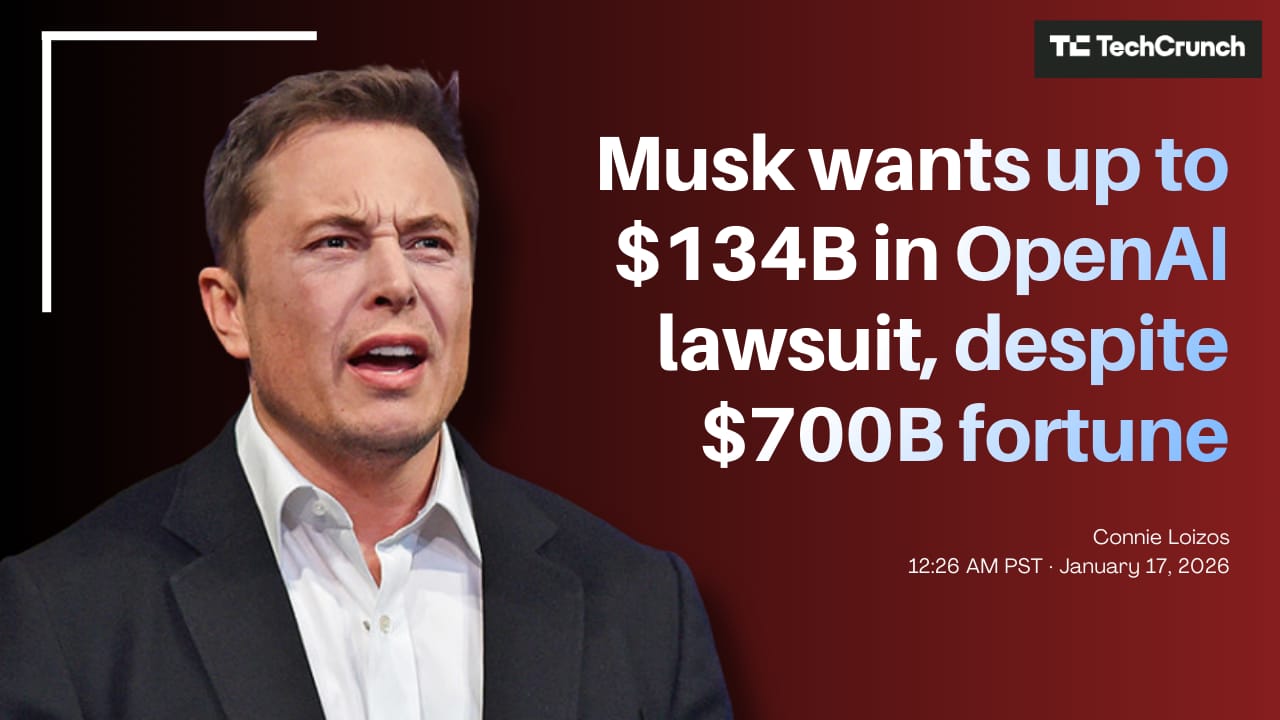
1. The Most Expensive AI Lawsuit Yet: Musk vs. OpenAI
Elon Musk is seeking between $79 billion and $134 billion in damages from OpenAI and Microsoft, arguing the company betrayed its nonprofit mission. The staggering demand comes despite Musk’s already massive personal fortune and signals that the lawsuit is as much about influence and control as it is about compensation.
The Details:
Musk’s damages claim is based on a financial expert’s analysis tying his $38 million early contribution to OpenAI’s current valuation.
The calculation includes Musk’s technical and business involvement, assigning tens of billions in alleged “wrongful gains” to OpenAI and Microsoft.
Microsoft is implicated due to its large ownership stake, with damages estimates reaching over $25 billion.
OpenAI characterizes the lawsuit as harassment and has warned investors of further dramatic claims ahead of trial.
Why it Matters:
This case isn’t just a dispute between a founder and a startup — it’s a referendum on the future of AI governance. At stake are questions about nonprofit promises, control over frontier AI, and how early ideals collide with massive commercial success. The outcome could reshape how AI companies structure themselves, raise capital, and define accountability when mission-driven organizations become trillion-dollar forces.
Find out more about it here: https://techcrunch.com/2026/01/17/musk-wants-up-to-134b-in-openai-lawsuit-despite-700b-fortune/
2. US and Europe Agree on Rules for Using AI in Drug Development
U.S. and European regulators have jointly released principles for the responsible use of AI in drug development. The guidance aims to accelerate innovation while maintaining patient safety across research, trials, manufacturing, and post-market surveillance.
The Details:
The FDA and European Medicines Agency outlined best practices for using AI throughout the entire drug lifecycle.
Regulators want AI to shorten development timelines and reduce animal testing while preserving scientific rigor.
The initiative builds on earlier FDA and EMA AI frameworks and follows a 2024 bilateral cooperation meeting.
Pharmaceutical companies are rapidly investing in AI, with major deals and joint research labs already underway.
Why it Matters:
AI is becoming foundational to how new medicines are discovered and developed, but regulation has lagged behind innovation. This joint framework signals that regulators want AI adoption — not restriction — as long as safety, transparency, and accountability are built in. By aligning early, the U.S. and EU are shaping global standards that could determine how fast new therapies reach patients and how much trust clinicians and regulators place in AI-driven drug development.
Find out more about it here: https://www.reuters.com/business/healthcare-pharmaceuticals/us-european-regulators-set-principles-good-ai-practice-drug-development-2026-01-14/?utm_source=chatgpt.com
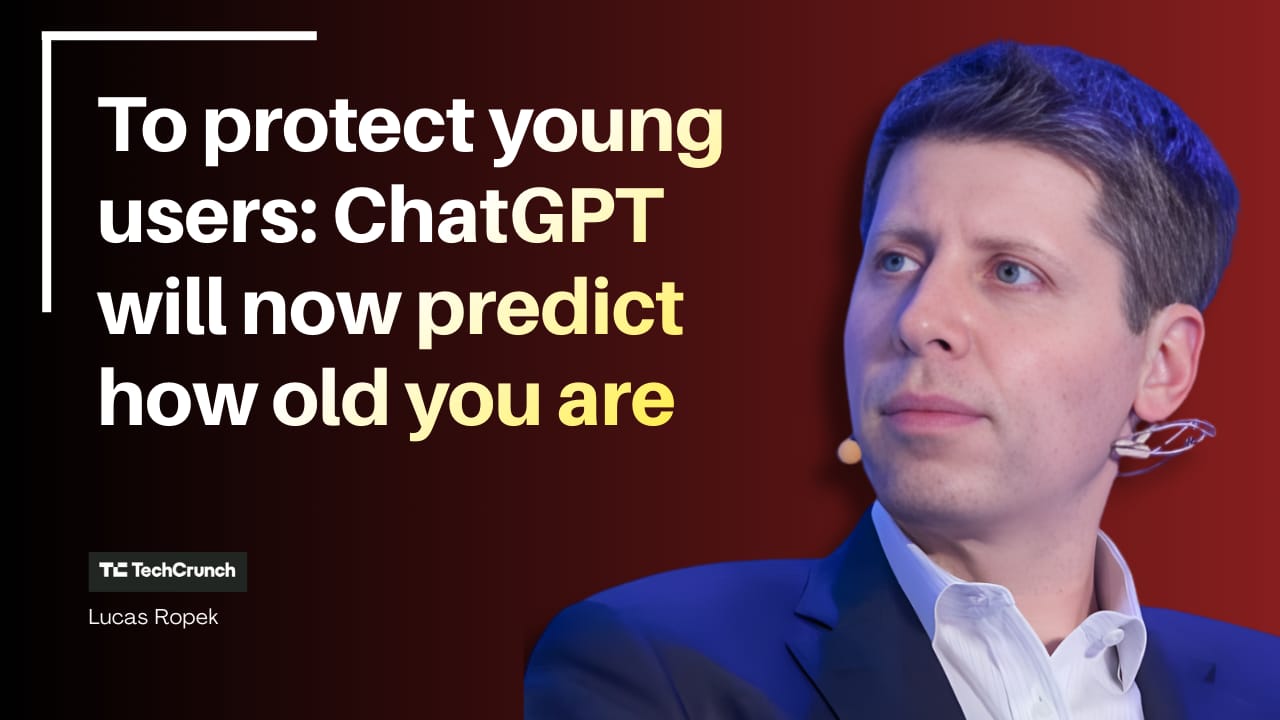
3. After Backlash, OpenAI Adds Age Prediction to ChatGPT
OpenAI has introduced an age-prediction system in ChatGPT to better identify minors and automatically apply stricter content safeguards. The move comes amid growing criticism and concern over the chatbot’s impact on young users, including mental-health risks and exposure to inappropriate content.overload.
The Details:
ChatGPT now uses behavioral and account-level signals, such as stated age, account history, and usage patterns, to estimate whether a user is under 18.
When a user is flagged as a minor, stricter filters are automatically applied to limit discussions of sexual, violent, or other sensitive topics.
OpenAI says this feature builds on existing protections and addresses past failures, including a bug that allowed explicit content for minors.
Users incorrectly flagged as underage can verify adulthood by submitting a selfie through OpenAI’s identity verification partner.
Why it Matters:
As AI tools become deeply embedded in daily life, protecting minors is turning into a legal and ethical flashpoint. Age prediction signals a shift from trust-based safeguards to proactive enforcement, but it also raises concerns about surveillance, misclassification, and data privacy. This move may set a precedent for how AI platforms balance child safety with user autonomy — and could shape upcoming regulations around AI access for minors.
Find out more about it here: https://techcrunch.com/2026/01/20/in-an-effort-to-protect-young-users-chatgpt-will-now-predict-how-old-you-are/
Stay tuned for more updates in our next newsletter!


Top 5 AI Tools That Help Professionals Think, Research, and Execute Faster
1. ChatGPT
ChatGPT helps clinicians, founders, and operators think through problems, draft content, summarize complex material, and explore scenarios quickly. Useful for clinical education, business strategy, documentation drafts, and structured reasoning. Free and paid plans available.
2. Perplexity AI
Perplexity provides fast, citation-backed answers using real-time sources. Ideal for healthcare professionals who want quick research summaries, guideline lookups, and current evidence without digging through multiple tabs. Free and paid plans available.
3. Notion AI
Notion AI turns notes, documents, and ideas into organized systems. It helps with meeting summaries, task generation, SOP drafting, and knowledge management for teams working in healthcare or business environments. Free tier available.
4. Claude
Claude excels at long-form reasoning, document analysis, and policy-style writing. Particularly useful for reviewing healthcare workflows, compliance documents, ethical considerations, and detailed explanations that require nuance. Free and paid plans available.
5. Canva AI
Canva AI makes it easy to create presentations, infographics, and visual explainers without design experience. Useful for healthcare education, internal training, marketing, and visual communication. Free plan available.


𝐈𝐟 𝐀𝐈 𝐧𝐞𝐞𝐝𝐬 𝐰𝐨𝐫𝐤𝐚𝐫𝐨𝐮𝐧𝐝𝐬, 𝐢𝐭 𝐚𝐥𝐫𝐞𝐚𝐝𝐲 𝐟𝐚𝐢𝐥𝐞𝐝.
Hospitals don’t need:
- More exceptions
- More side processes
- More “temporary fixes”
That’s how burnout compounds.
Good AI disappears into the workflow.
Bad AI announces itself constantly.
If clinicians have to remember
when not to trust the tool
The tool isn’t ready for care.
Curious how we tell the difference between
demo-grade AI and clinical-grade AI?
Happy to share...
Here’s an un-boring way to invest that billionaires have quietly leveraged for decades

If you have enough money that you think about buckets for your capital…
Ever invest in something you know will have low returns—just for the sake of diversifying?
CDs… Bonds… REITs… :(
Sure, these “boring” investments have some merits. But you probably overlooked one historically exclusive asset class:
It’s been famously leveraged by billionaires like Bezos and Gates, but just never been widely accessible until now.
It outpaced the S&P 500 (!) overall WITH low correlation to stocks, 1995 to 2025.*
It’s not private equity or real estate. Surprisingly, it’s postwar and contemporary art.
And since 2019, over 70,000 people have started investing in SHARES of artworks featuring legends like Banksy, Basquiat, and Picasso through a platform called Masterworks.
23 exits to date
$1,245,000,000+ invested
Annualized net returns like 17.6%, 17.8%, and 21.5%
My subscribers can SKIP their waitlist and invest in blue-chip art.
Investing involves risk. Past performance not indicative of future returns. Reg A disclosures at masterworks.com/cd
Want to work with Me? Here’s how:
I help companies with AI integration and with other technology and development requirements. Book a Strategy Call. (https://calendly.com/dr-umerkhan/available-for-meeting)
Promote Your Product: I’ll share your product with my 15k followers on LinkedIn. Reply “promo” if interested.
If you enjoyed this newsletter, please forward it to your friends and colleagues.
Follow me on LinkedIn, Youtube, and X/Twitter to see my latest content.
My Latest LinkedIn Posts

Download the Human-in-the-Loop Decision Guide (PDF)
Designed for clinicians, healthcare leaders, and AI builders working in high-stakes environments.
|

—
Stay Tuned
Stay tuned for more updates on AI trends, tools, and insights in our next newsletter.
Reply