- AIpreneur Insights
- Posts
- MUST READ: This AI Maps Your Competitors’ Weaknesses in Minutes!
MUST READ: This AI Maps Your Competitors’ Weaknesses in Minutes!
Spy smarter, not harder—uncover competitor gaps before they do. 🕵️♂️

Umer Khan
January 05, 2026 • Estimated Reading Time: 14 minutes
In partnership with


Welcome, AI Entrepreneurs!
Ready to uncover exactly where your competitors are leaking traffic and revenue—without manual research?
I’m so excited to tell you in today’s issue about how you can use Similarweb AI to instantly analyze competitor performance, traffic sources, and market blind spots that would normally take weeks to uncover.
It’s like having a competitive intelligence team—working for you, 24/7, at scale.
In today’s AIpreneurs Insights:
Spotlight Tool of the Week: Similarweb AI: Map Your Competitors’ Weaknesses in Minutes
Become the Human in the Loop in Healthcare AI: Basics 3-5: Batch Normalization
Top 3 AI Business Search Trends of the Week
Top 5 AI-Powered Competitive Intelligence Tools
Free Resource: Competitor Weakness Discovery Playbook


Similarweb AI: Map Your Competitors’ Weaknesses in Minutes
Discover how Similarweb AI helps founders, marketers, and growth teams understand what’s really driving competitor traffic—and where they’re vulnerable. Our demo shows how you can analyze acquisition channels, audience behavior, keyword gaps, and market trends using AI-powered insights. Teams use it to refine positioning, outmaneuver competitors, and double down on what actually works.
See how competitive intelligence can turn guesswork into data-backed strategy.

Don’t miss the product demo by Cybernews.
You can explore more about it at https://www.similarweb.com/
Not subscribed yet?
Are you keeping up with the latest in AI for business? Our newsletter is essential reading for anyone navigating the AI landscape. It’s free, and industry leaders from top companies like Google, Hubspot, and Meta are already on board.
Interested in daily insights and practical AI tips for driving business success? Sign up for our newsletter with just one click—it's completely free!
Big News: Our New Program Is Live!!!

Healthcare is changing faster than ever. From AI tools that process claims in seconds, to predictive models that identify high-risk patients before complications happen, the message is clear: AI is already reshaping care delivery.
But here’s the challenge:
Many AI tools are overhyped without evidence.
Implementation often fails because leaders don’t understand the unique complexities of healthcare.
Ethical and trust concerns still remain at the center.
That’s exactly why I created Become the Human in the Loop in Healthcare AI — a program designed for health leaders, executives, and non-technical professionals who want to lead responsibly in this new era.
Watch the video HERE…
If you’re serious about AI in healthcare, skip the free scattered route.
Get the structured course: https://www.umerkhanmd.com/buy_videoprogram
Clear communicators aren't lucky. They have a system.

Here's an uncomfortable truth: your readers give you about 26 seconds.
Smart Brevity is the methodology born in the Axios newsroom — rooted in deep respect for people's time and attention. It works just as well for internal comms, executive updates, and change management as it does for news.
We've bundled six free resources — checklists, workbooks, and more — so you can start applying it immediately.
The goal isn't shorter. It's clearer. And clearer gets results.

1. This AI Tool Spotted Breast Cancer Months Before Symptoms Appeared
A new study from Massachusetts General Hospital shows that AI-powered mammography can help detect breast cancers that were initially read as negative. The findings suggest AI could act as a critical second set of eyes, flagging suspicious areas months before cancer is clinically diagnosed.

The Details:
Researchers analyzed 7,500 3D mammography exams and found that AI flagged 32% of cases later diagnosed as cancer within a year.
The AI correctly localized suspicious regions on mammograms, helping identify where cancer eventually developed.
In known cancer cases, the AI flagged nearly 90% and was particularly effective at detecting invasive ductal and lymph node–positive cancers.
The study highlighted limitations, including a single-center design and lack of real-world workflow and outcome evaluation.
Why it Matters:
False-negative mammograms can delay diagnosis and treatment, directly impacting patient outcomes. This study suggests AI can meaningfully reduce those blind spots without replacing radiologists. As breast imaging volumes rise and workforce pressures grow, AI tools like this could improve early detection, support clinician decision-making, and ultimately save lives — if validated across diverse populations and real clinical settings.
Find out more about it here: https://www.linkedin.com/pulse/ai-just-found-breast-cancers-radiologists-missed-here-umer-khan-md-tipfe
2. GPT-5.2 Is OpenAI’s Most Serious Shot Yet at Beating Google
OpenAI has released GPT-5.2, its most advanced frontier model yet, targeting developers and professional use cases amid rising competition from Google’s Gemini 3. The launch emphasizes stronger reasoning, coding, and reliability as OpenAI looks to regain momentum and defend its leadership position.

The Details:
GPT-5.2 launches in three versions optimized for speed, deep reasoning, and maximum accuracy across professional workflows.
OpenAI claims major gains in coding, math, science, vision, long-context reasoning, and tool use, with fewer errors than previous models.
The model directly competes with Google’s Gemini 3 and Anthropic’s Claude, particularly in complex reasoning and agentic workflows.
GPT-5.2 reflects OpenAI’s growing focus on enterprise adoption, even as compute costs and infrastructure commitments continue to rise.
Why it Matters:
GPT-5.2 marks a shift from flashy demos to production-grade AI designed to power real businesses and applications. As Google tightens its grip through deep ecosystem integration, OpenAI is betting that superior reasoning and developer tooling will keep it competitive. But this strategy comes with risk: advanced reasoning models are expensive to run at scale. The success of GPT-5.2 may determine whether OpenAI can turn technical leadership into sustainable dominance in the next phase of the AI race.
Find out more about it here: https://www.linkedin.com/pulse/openais-biggest-bet-yet-why-gpt-52-matters-more-than-looks-md-vpdte
3. State AGs Warn AI Giants: Fix “Delusional” Chatbot Outputs or Face Legal Action
A coalition of state attorneys general has warned major AI companies that “delusional” and psychologically harmful chatbot outputs could violate state laws. The letter urges firms like OpenAI, Google, and Microsoft to adopt stronger safeguards as AI-related mental health incidents continue to mount.

The Details:
Dozens of state AGs asked AI companies to implement audits and safeguards targeting sycophantic and delusional model behavior.
The letter calls for independent third-party testing, public reporting, and protections for researchers evaluating models pre-release.
AGs want AI mental health incidents treated like cybersecurity breaches, with clear detection timelines and direct user notifications.
The warning comes amid growing tension between states pushing AI oversight and federal efforts to limit state-level regulation.
Why it Matters:
This marks a major escalation in how governments view AI-related psychological harm. If AI hallucinations and reinforcing delusions are treated as legal liabilities, companies may face compliance obligations similar to data breach laws. The move also sharpens the federal-versus-state battle over who controls AI regulation. As AI systems become more emotionally interactive, safety failures may no longer be dismissed as edge cases — but as enforceable risks with real legal consequences.
Find out more about it here: https://www.linkedin.com/pulse/state-ags-warn-ai-giants-fix-delusional-chatbot-behavior-umer-khan-md-v72xe
Stay tuned for more updates in our next newsletter!


Top 5 AI-Powered Competitive Intelligence Tools
1. Kompyte (AI Competitive Intelligence)
Kompyte uses AI to track competitors’ websites, pricing pages, messaging changes, product updates, ads, and positioning in real time. It automatically highlights strategic gaps, outdated claims, and areas where competitors are falling behind. Free trial available.
2. Crayon
Crayon monitors competitors’ messaging, feature changes, pricing updates, and go-to-market moves. Its AI alerts teams to subtle shifts you can exploit before they become obvious. Free trial available.
3. SEMrush Competitive Intelligence
SEMrush uncovers keyword gaps, backlink weaknesses, content blind spots, and paid ad inefficiencies using AI-driven analysis. Ideal for SEO and growth teams. Limited free access available.
4. SparkToro
SparkToro shows where your competitors’ audiences actually spend time — websites, podcasts, YouTube channels, social accounts, and influencers. Perfect for discovering underused acquisition channels. Free searches available.
5. Owler Max
Owler tracks competitors’ revenue signals, hiring trends, leadership changes, acquisitions, and financial health. Helps spot instability, stagnation, or missed growth opportunities early. Free plan available.


𝐈 𝐬𝐞𝐞 𝐭𝐡𝐢𝐬 𝐞𝐯𝐞𝐫𝐲 𝐝𝐚𝐲...
Not in labs.
Not in code.
But in real workflows.
AI gets blamed for mistakes it was never taught to avoid.
Clinicians distrust systems they were never trained to question.
Organizations deploy tools without understanding how decisions are actually made.
𝐀𝐧𝐝 𝐭𝐡𝐞𝐧 𝐰𝐞 𝐚𝐜𝐭 𝐬𝐮𝐫𝐩𝐫𝐢𝐬𝐞𝐝 𝐰𝐡𝐞𝐧 𝐭𝐡𝐢𝐧𝐠𝐬 𝐠𝐨 𝐰𝐫𝐨𝐧𝐠.
AI isn’t replacing judgment.
It’s exposing where judgment was never updated.
The real risk isn’t “superintelligence.”
It’s unexamined intelligence
Using powerful tools with outdated mental models.
In healthcare especially, this gap is dangerous.
Because when an AI recommendation appears on a screen,
Someone still has to decide
- whether to trust it,
- challenge it, or
- override it.
That someone is human.
If we don’t evolve our understanding alongside these systems,
we don’t lose relevance
we lose responsibility.
And responsibility is the one thing we can’t afford to outsource.
Are we training AI faster than we’re training the people expected to use it?
Six resources. One skill you'll use forever
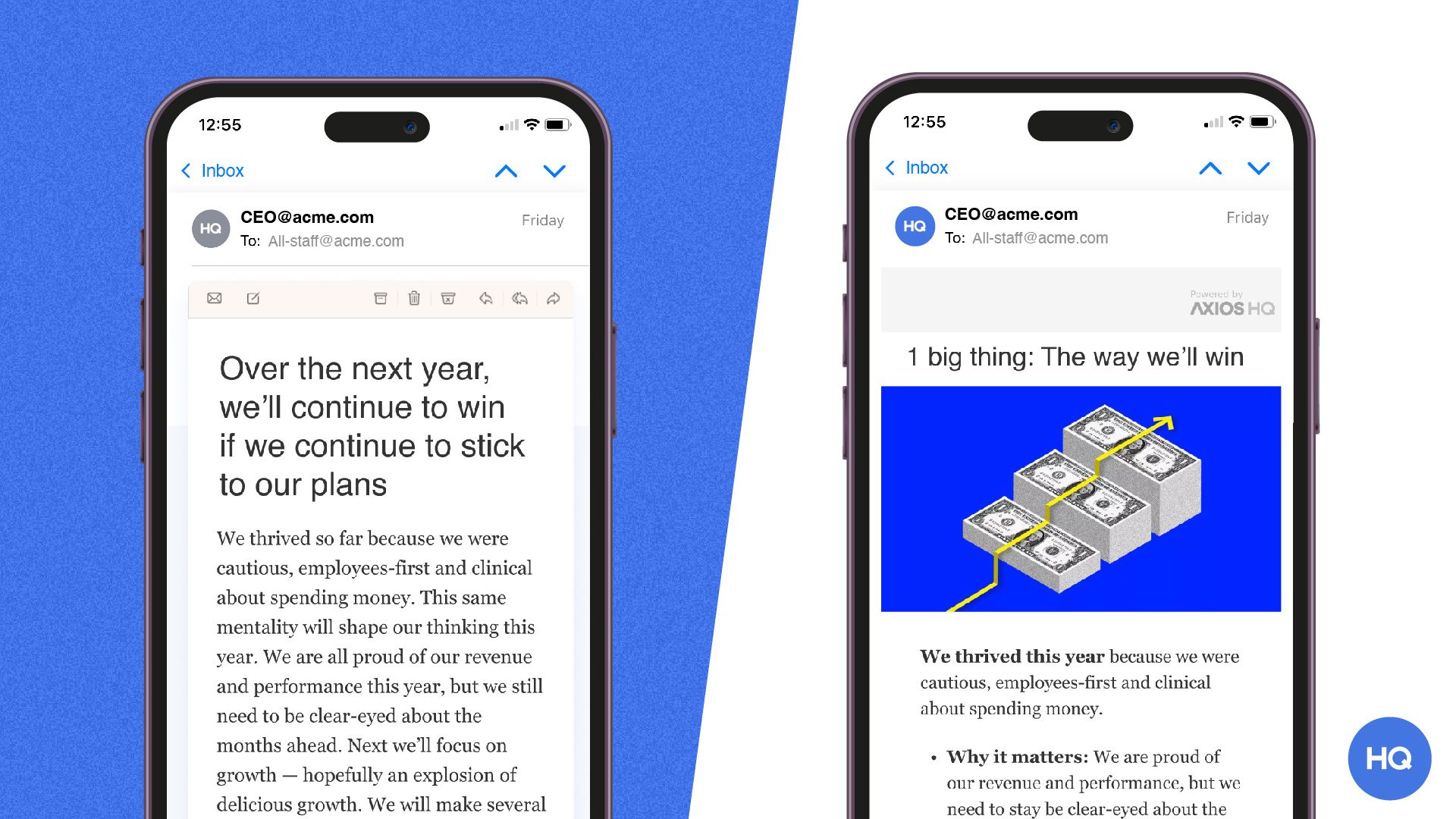
Smart Brevity is the methodology behind Axios — designed to make every message memorable, clear, and impossible to ignore. Our free toolkit includes the checklist, workbooks, and frameworks to start using it today.
Want to work with Me? Here’s how:
I help companies with AI integration and with other technology and development requirements. Book a Strategy Call. (https://calendly.com/dr-umerkhan/available-for-meeting)
Promote Your Product: I’ll share your product with my 15k followers on LinkedIn. Reply “promo” if interested.
If you enjoyed this newsletter, please forward it to your friends and colleagues.
Follow me on LinkedIn, Youtube, and X/Twitter to see my latest content.
My Latest LinkedIn Posts

Stop reacting to competitors. Start outsmarting them.
Download your free Competitor Weakness Discovery Playbook and uncover growth opportunities your rivals don’t see.
|

—
Stay Tuned
Stay tuned for more updates on AI trends, tools, and insights in our next newsletter.
Reply