- AIpreneur Insights
- Posts
- MUST READ: Check out this AI That Converts Figma Designs into Code
MUST READ: Check out this AI That Converts Figma Designs into Code
Turn design files into production-ready code—without slowing down your dev team.

Umer Khan
January 26, 2026 • Estimated Reading Time: 5 minutes
In partnership with


Welcome, AI Entrepreneurs!
Ready to ship faster—without rebuilding designs from scratch?
I’m so excited to tell you in today’s issue about how you can use Locofy AI to convert Figma designs into clean, responsive code automatically—saving weeks of development time.
It’s like having a front-end engineer embedded inside Figma—working for you, 24/7.
In today’s AIpreneurs Insights:
Spotlight Tool of the Week: Locofy AI: Convert Figma Designs into Production-Ready Code
Become the Human in the Loop in Healthcare AI: Basics 3-8: Recurrent Neural Networks
Top 3 AI Business Search Trends of the Week
Top 5 AI Tools to Turn Figma Designs Into Code Instantly
Free Resource: Figma-to-Code AI Handoff Playbook


Locofy AI: Convert Figma Designs into Production-Ready Code
Discover how Locofy AI helps founders, designers, and product teams transform Figma designs into real code using AI-powered automation.
Our demo shows how you can generate React, Next.js, HTML/CSS, and other frameworks directly from design components—while keeping layouts responsive and reusable. Teams use it to speed up launches, reduce handoff friction, and ship features faster.
See how AI-powered design-to-code can eliminate bottlenecks between design and development.
Don’t miss the product demo by Hustling Labs!
You can explore more about it at https://www.locofy.ai/
Not subscribed yet?
Are you keeping up with the latest in AI for business? Our newsletter is essential reading for anyone navigating the AI landscape. It’s free, and industry leaders from top companies like Google, Hubspot, and Meta are already on board.
Interested in daily insights and practical AI tips for driving business success? Sign up for our newsletter with just one click—it's completely free!
Big News: Our New Program Is Live!!!

Healthcare is changing faster than ever. From AI tools that process claims in seconds, to predictive models that identify high-risk patients before complications happen, the message is clear: AI is already reshaping care delivery.
But here’s the challenge:
Many AI tools are overhyped without evidence.
Implementation often fails because leaders don’t understand the unique complexities of healthcare.
Ethical and trust concerns still remain at the center.
That’s exactly why I created Become the Human in the Loop in Healthcare AI — a program designed for health leaders, executives, and non-technical professionals who want to lead responsibly in this new era.
Watch the video HERE…
If you’re serious about AI in healthcare, skip the free scattered route.
Get the structured course: https://www.umerkhanmd.com/buy_videoprogram
The Future of Shopping? AI + Actual Humans.

AI has changed how consumers shop by speeding up research. But one thing hasn’t changed: shoppers still trust people more than AI.
Levanta’s new Affiliate 3.0 Consumer Report reveals a major shift in how shoppers blend AI tools with human influence. Consumers use AI to explore options, but when it comes time to buy, they still turn to creators, communities, and real experiences to validate their decisions.
The data shows:
Only 10% of shoppers buy through AI-recommended links
87% discover products through creators, blogs, or communities they trust
Human sources like reviews and creators rank higher in trust than AI recommendations
The most effective brands are combining AI discovery with authentic human influence to drive measurable conversions.
Affiliate marketing isn’t being replaced by AI, it’s being amplified by it.

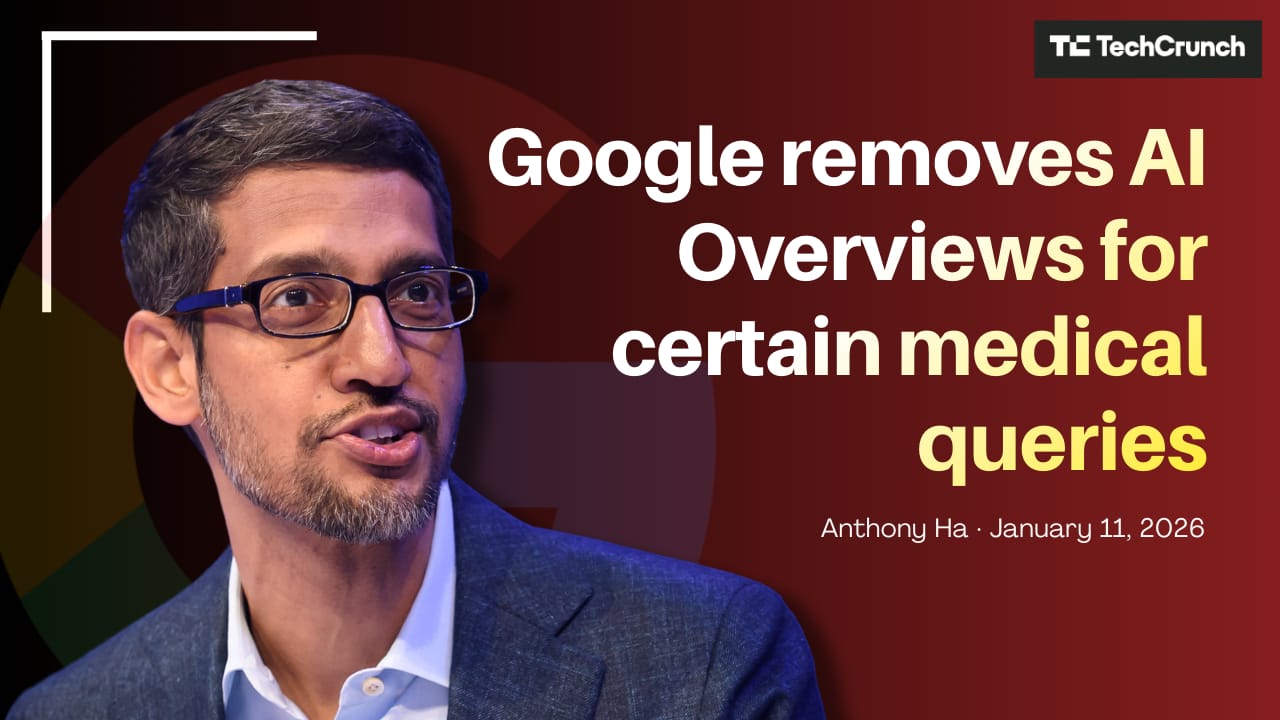
1. After Backlash, Google Removes AI Answers From Certain Health Queries
Google has removed AI Overviews from certain medical search queries after reports found the feature offering potentially misleading health information. While the company says it is improving accuracy, critics warn the changes do not address broader risks of using AI summaries for healthcare advice.
The Details:
AI Overviews were removed from specific liver test queries after concerns that results failed to account for age, sex, ethnicity, and other clinical factors.
Some variations of those searches initially still triggered AI summaries, highlighting gaps in how removals are applied.
Google says clinicians reviewed the flagged queries and defended the underlying information as generally accurate.
Health advocates argue disabling AI answers for select queries avoids addressing systemic risks of AI-driven medical search.
Why it Matters:
Search engines are increasingly acting as de facto health advisors for millions of users. When AI-generated summaries oversimplify medical data, they risk false reassurance or unnecessary alarm. Google’s selective rollback signals growing caution around AI in healthcare — but also underscores the need for stronger safeguards, transparency, and clinical context before AI tools can safely guide medical decision-making at scale.
Find out more about it here: https://techcrunch.com/2026/01/11/google-removes-ai-overviews-for-certain-medical-queries/
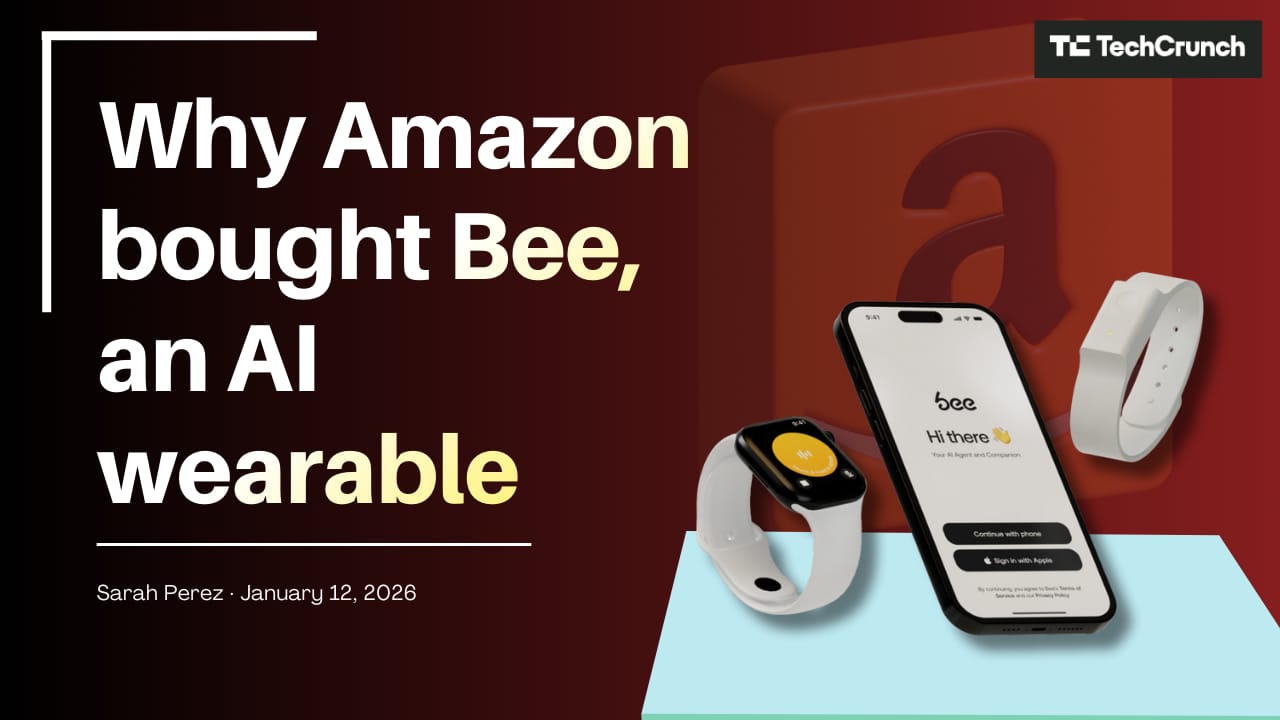
2. Bee Explains Amazon’s Bigger Vision for Personal AI
Amazon acquired Bee, an AI wearable that records and summarizes conversations, to extend its AI reach beyond the home. While Alexa dominates inside the house, Bee gives Amazon a foothold in always-on, personal, out-of-home AI experiences.
The Details:
Bee is a wearable AI device that records conversations, transcribes them, and generates summaries, insights, and follow-ups throughout the day.
The AI learns from user data and connected services like email, calendars, contacts, and health apps to build a personalized knowledge graph.
Amazon sees Bee as complementary to Alexa, covering “outside the house” use cases while Alexa focuses on the home.
The Bee team remains independent for now, but Amazon expects eventual convergence between Bee and Alexa experiences.
Why it Matters:
This acquisition signals Amazon’s belief that the next phase of AI is continuous, ambient, and deeply personal. By moving AI into wearables, Amazon is betting that users want an assistant that remembers, reflects, and evolves with them throughout the day. If successful, Bee could redefine how people capture knowledge, manage memory, and interact with AI — while also raising new questions about privacy, consent, and always-listening devices in everyday life.
Find out more about it here: https://techcrunch.com/2026/01/12/why-amazon-bought-bee-an-ai-wearable/
3. Claude for Healthcare: Anthropic’s Answer to ChatGPT Health
Anthropic has launched Claude for Healthcare, a suite of AI tools designed for providers, payers, and patients, just weeks after OpenAI unveiled ChatGPT Health. Unlike patient-focused chat experiences, Anthropic is positioning Claude as a more operational, agent-driven system to tackle healthcare’s administrative overload.

The Details:
Claude for Healthcare allows users to connect health data from devices and platforms without using that data to train models.
Anthropic has introduced “connectors” that let Claude access trusted medical and administrative databases like CMS, ICD-10, and PubMed.
The tools aim to automate administrative workflows such as prior authorization reviews and report generation.
While concerns remain about hallucinations, Anthropic emphasizes automating paperwork rather than replacing clinical judgment.
Why it Matters:
Healthcare is drowning in administrative work, and AI companies see an opportunity to intervene. By focusing on agents, connectors, and workflow automation, Anthropic is targeting a high-friction part of healthcare that burns out clinicians and delays care. But as AI becomes more embedded in medical processes, the line between administrative assistance and medical decision-making will blur — raising ongoing questions about safety, trust, and accountability.
Find out more about it here: https://techcrunch.com/2026/01/12/anthropic-announces-claude-for-healthcare-following-openais-chatgpt-health-reveal/
Stay tuned for more updates in our next newsletter!

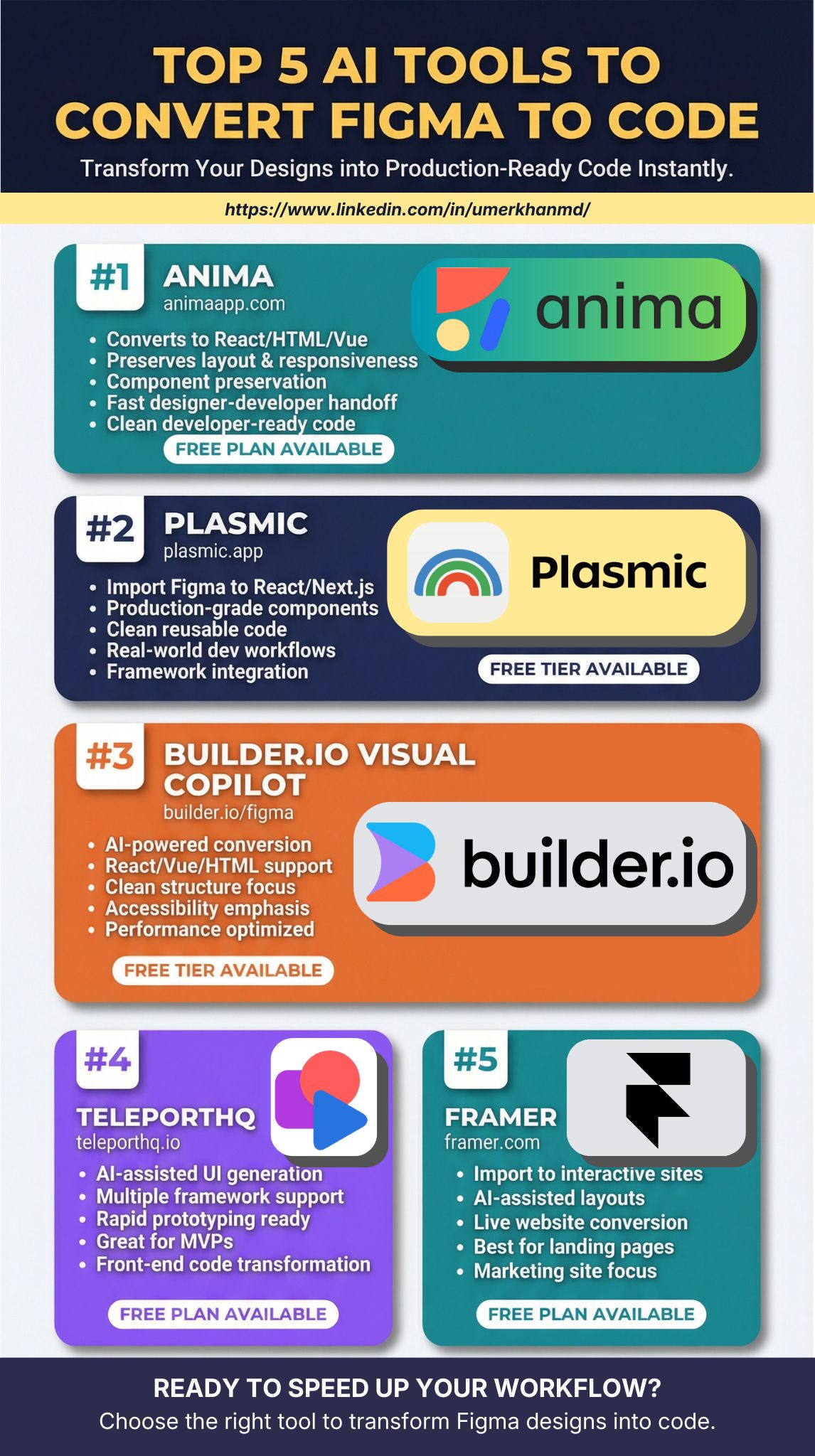
Top 5 AI Tools to Turn Figma Designs Into Code Instantly
1. Anima
Anima converts Figma designs into clean, developer-ready code (React, HTML/CSS, Vue). It preserves layout, responsiveness, and components, making designer–developer handoff much faster. Free plan available.
2. Plasmic (Figma to React / Next.js)
Plasmic lets you import Figma designs and turn them into production-grade React or Next.js components. It focuses on clean code, reusable components, and real-world dev workflows. Free tier available.
3. Builder.io – Visual Copilot
Visual Copilot uses AI to convert Figma designs into high-quality React, Vue, or HTML code. Emphasizes clean structure, accessibility, and performance. Free tier available.
4. TeleportHQ
TeleportHQ transforms Figma designs into front-end code with AI-assisted UI generation. Supports multiple frameworks and is great for rapid prototyping and MVPs. Free plan available.
5. Framer (Figma to Live Site)
Framer lets you import Figma designs and convert them into interactive, live websites with AI-assisted layouts and components. Best for landing pages and marketing sites. Free plan available.

𝐑𝐞𝐚𝐥𝐢𝐭𝐲 𝐜𝐡𝐞𝐜𝐤:
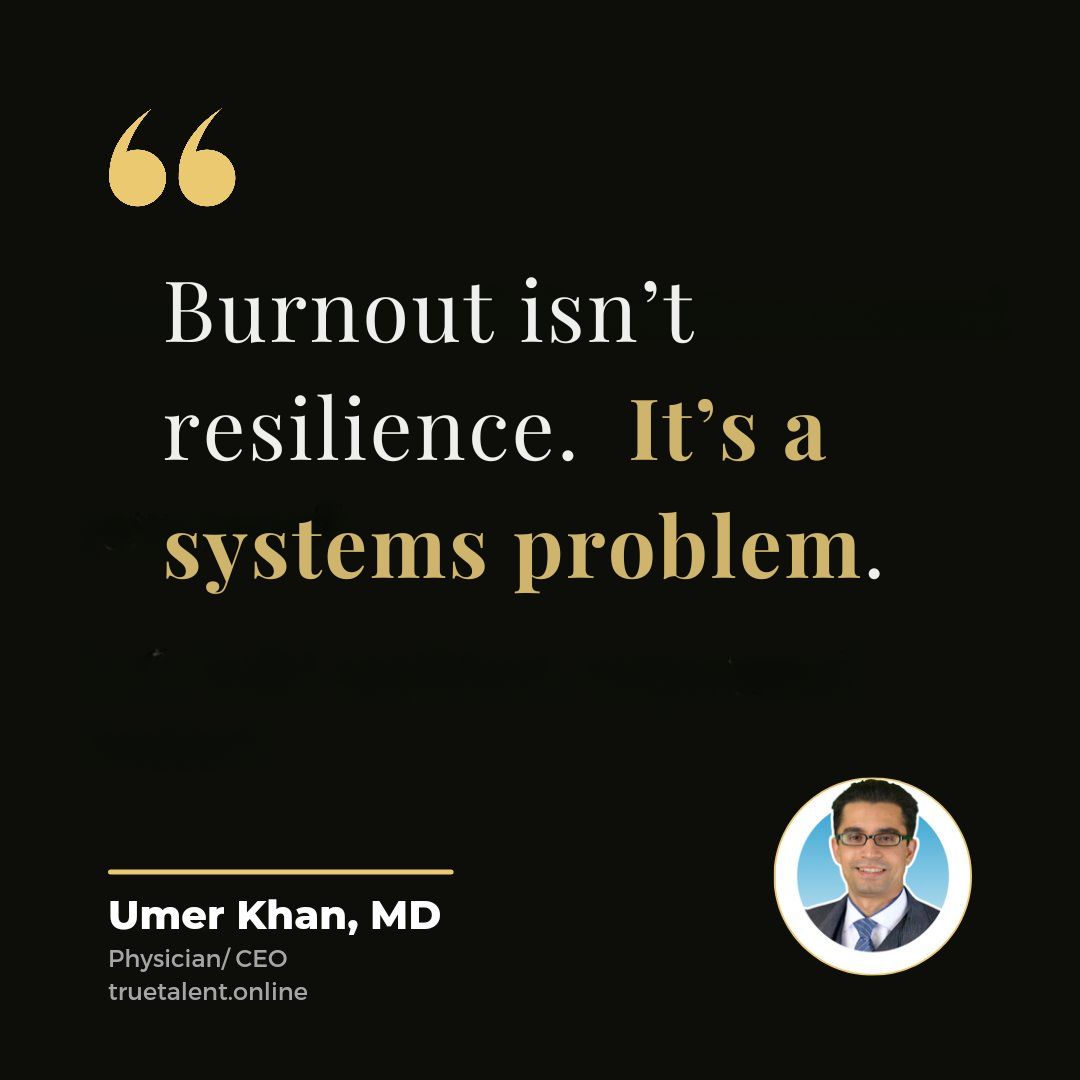
𝐁𝐮𝐫𝐧𝐨𝐮𝐭 𝐢𝐬𝐧’𝐭 𝐫𝐞𝐬𝐢𝐥𝐢𝐞𝐧𝐜𝐞.
𝐈𝐭’𝐬 𝐚 𝐬𝐲𝐬𝐭𝐞𝐦𝐬 𝐩𝐫𝐨𝐛𝐥𝐞𝐦.
We keep praising clinicians for “pushing through.”
But the workload keeps creeping.
One more task.
One more checkbox.
One more inbox alert.
Documentation quietly explodes.
Notes get longer.
Compliance grows.
Time with patients shrinks.
None of this makes care better.
It just makes people tired.
Burnout isn’t a personal failure.
It’s what happens when systems offload work onto humans
and call it grit.
If we want resilient clinicians,
We need humane systems.
Not thicker skin.
Better design.
If you want to talk through what this could look like in your setting…
Let’s talk: (https://calendly.com/dr-umerkhan/available-for-meeting)
The Future of Shopping? AI + Actual Humans.

AI has changed how consumers shop, but people still drive decisions. Levanta’s research shows affiliate and creator content continues to influence conversions, plus it now shapes the product recommendations AI delivers. Affiliate marketing isn’t being replaced by AI, it’s being amplified.
Want to work with Me? Here’s how:
I help companies with AI integration and with other technology and development requirements. Book a Strategy Call. (https://calendly.com/dr-umerkhan/available-for-meeting)
Promote Your Product: I’ll share your product with my 15k followers on LinkedIn. Reply “promo” if interested.
If you enjoyed this newsletter, please forward it to your friends and colleagues.
Follow me on LinkedIn, Youtube, and X/Twitter to see my latest content.
My Latest LinkedIn Posts

Turn designs into clean, usable code — without dev headaches.
Download the free Figma-to-Code AI Handoff Playbook and generate better code from your designs instantly.
|

—
Stay Tuned
Stay tuned for more updates on AI trends, tools, and insights in our next newsletter.
Reply