- AIpreneur Insights
- Posts
- 2026 Is Not About More AI. It Is About Integration.
2026 Is Not About More AI. It Is About Integration.
Why 2026 marks the shift from pilots to infrastructure...

Umer Khan
March 02, 2026 • Estimated Reading Time: 5 minutes
In partnership with


Welcome, AI Entrepreneurs!
For years, AI in healthcare has been treated as an experiment.
A proof-of-concept. A pilot. A promising demo.
By 2026, that phase ends.
AI is no longer a shiny add-on. It becomes expected infrastructure embedded into workflows, governed strategically, and measured by clinical and financial outcomes.
This issue breaks down what normalization really looks like and why the next phase of AI in healthcare is about discipline, not hype.
In today’s AIpreneurs Insights:
Spotlight of the Week: 2026: The Year of AI Normalization in Healthcare
Become the Human in the Loop in Healthcare AI
Top 3 AI Business Search Trends of the Week
Top 5 AI Tools That Support Safe and Responsible AI Rollout in Healthcare
Free Resource: The Human-in-the-Loop Healthcare AI Decision Guide


2026: The Year of AI Normalization in Healthcare
This week’s infographic outlines the transition from experimentation to normalization.
The infrastructure shift moves healthcare from point solutions to integrated platforms. AI governance becomes a strategic engine, not an afterthought. The black box era fades as explainability and clinician trust become competitive advantages.
Clinically, decision support evolves from simple search tools to contextual reasoning systems embedded directly within patient encounters. The rise of a context layer prepares charts before visits and integrates payer requirements, records, and conversational reasoning in one flow.
Financially, ROI shifts beyond “pajama time” savings. Systems measure impact through readmissions, retention, quality metrics, and reduced revenue cycle friction.
The message is simple. By 2026, AI is no longer optional. It is expected.

The organizations that normalize AI responsibly will lead. Those that treat it as a side project will struggle.
This is exactly what I focus on in Become the Human in the Loop in Healthcare AI. The next phase is not about tools. It is about infrastructure, governance, and accountable deployment.
Not subscribed yet?
Are you keeping up with the latest in AI for business and healthcare? Our newsletter is essential reading for anyone navigating the AI landscape. It’s free, and industry leaders from top companies like Google, Hubspot, and Meta are already on board.
Sign up for our newsletter with just one click—it's completely free!!!
Big News: Our Program Is Live!!!

Normalization requires leadership.
If AI is becoming infrastructure, healthcare needs professionals who understand not just how to use AI tools, but how to evaluate, govern, and deploy them responsibly.
In Become the Human in the Loop in Healthcare AI, I teach clinicians and executives how to transition from pilot thinking to infrastructure thinking.
You will learn how to assess readiness, build governance frameworks, measure ROI beyond surface metrics, and embed AI safely into workflows.
2026 will not reward early adopters. It will reward disciplined implementers.
Check out the structured program HERE: https://www.umerkhanmd.com/buy_videoprogram
How can AI power your income?

Ready to transform artificial intelligence from a buzzword into your personal revenue generator
HubSpot’s groundbreaking guide "200+ AI-Powered Income Ideas" is your gateway to financial innovation in the digital age.
Inside you'll discover:
A curated collection of 200+ profitable opportunities spanning content creation, e-commerce, gaming, and emerging digital markets—each vetted for real-world potential
Step-by-step implementation guides designed for beginners, making AI accessible regardless of your technical background
Cutting-edge strategies aligned with current market trends, ensuring your ventures stay ahead of the curve
Download your guide today and unlock a future where artificial intelligence powers your success. Your next income stream is waiting.

1. The Creator of OpenClaw Just Joined OpenAI
Peter Steinberger, creator of the viral AI assistant OpenClaw, has joined OpenAI to help build the next generation of personal AI agents. Rather than scaling his startup independently, Steinberger says partnering with OpenAI offers the fastest path to global impact.

The Details:
OpenClaw gained rapid attention for positioning itself as an AI that actively executes tasks such as managing calendars, booking travel, and interacting across digital platforms.
The project underwent multiple name changes following legal concerns and branding decisions, but maintained strong developer momentum and public interest.
Steinberger stated he was less interested in building a large company and more focused on accelerating world-changing AI capabilities.
OpenAI CEO Sam Altman confirmed Steinberger will lead work on next-generation personal agents, while OpenClaw will continue as an open-source foundation-backed project.
Why it Matters:
The race to build true “agentic” AI is intensifying, shifting from chatbots to systems that autonomously act on a user’s behalf. OpenAI bringing in a builder known for practical execution signals a deeper push toward AI that doesn’t just answer questions but performs real-world tasks. The future of AI may depend less on better conversation — and more on reliable action.
Find out more about it here: https://techcrunch.com/2026/02/15/openclaw-creator-peter-steinberger-joins-openai/
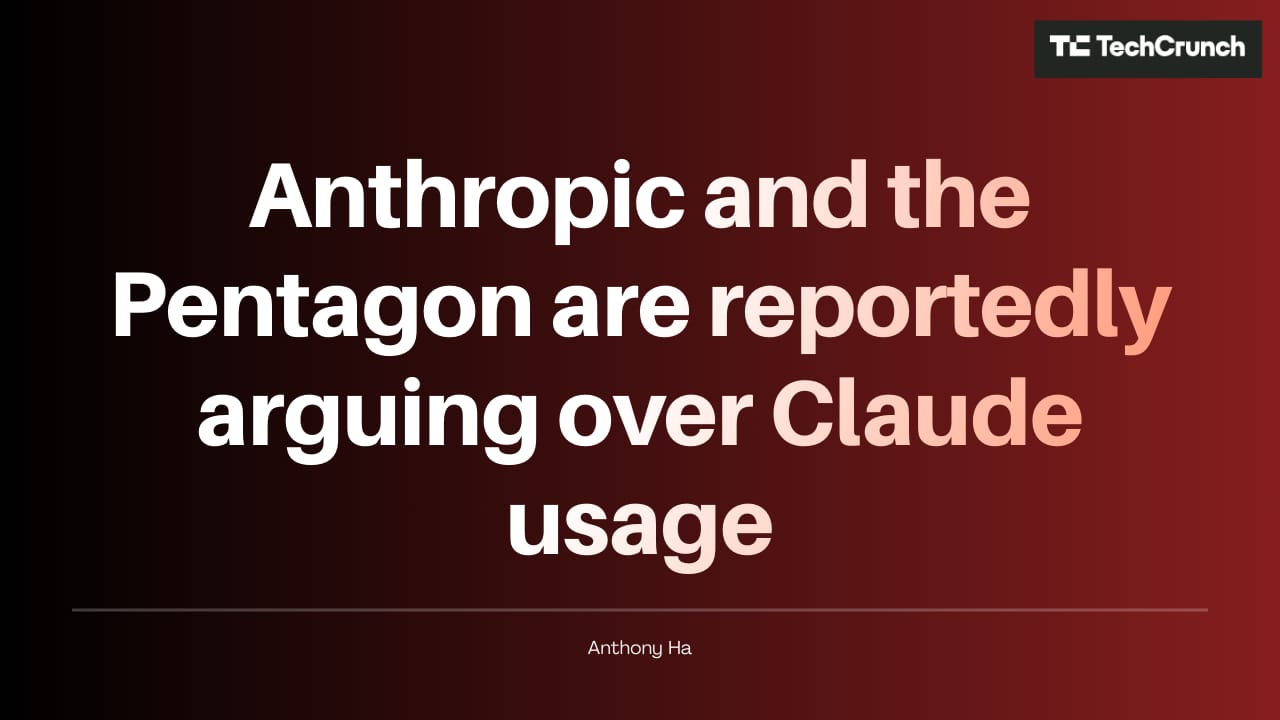
2. Claude vs. The Pentagon: AI Boundaries Tested
The Pentagon is reportedly pressuring major AI companies to allow unrestricted military use of their models for “all lawful purposes.” Anthropic is said to be the most resistant, potentially putting its $200 million defense contract at risk.
The Details:
The U.S. government has asked AI firms including Anthropic, OpenAI, Google, and xAI to permit military usage of their technology without restrictive limitations.
Reports suggest at least one company has agreed, while others have shown flexibility, but Anthropic has resisted broader authorization.
The Pentagon is reportedly considering canceling Anthropic’s $200 million contract over disagreements about usage policies.
Anthropic maintains it supports lawful use but draws firm boundaries around fully autonomous weapons and mass domestic surveillance.
Why it Matters:
This dispute highlights a growing tension between AI ethics and national security demands. As frontier AI models become strategically valuable, governments want fewer constraints, while companies must balance commercial opportunity with reputational and moral risk. The outcome could shape global norms around military AI deployment — and define how much control private labs retain over how their models are used in conflict and surveillance.
Read more about it here: https://www.linkedin.com/pulse/should-ai-companies-let-military-use-models-all-lawful-umer-khan-md-taqje
3. Why Your Boss Loves AI and You Don’t
AI is driving a surge in productivity, but much of the financial gain appears to be flowing to corporate profits rather than worker wages. Economists warn this mirrors a historical pattern from the Industrial Revolution, when productivity soared while worker pay stagnated for decades.

The Details:
Recent productivity gains in the U.S. economy are increasingly being reflected in corporate profits, while labor’s share of GDP continues to decline.
Job growth has slowed significantly even as GDP remains steady, suggesting higher output per worker rather than broad hiring expansion.
Economists draw parallels to “Engels’ pause,” a 19th-century period when industrial output surged but wages remained flat for over 50 years.
Surveys show a sharp disconnect between executives, who are enthusiastic about AI adoption, and workers, many of whom distrust the technology and fear displacement.
Why it Matters:
If AI-driven efficiency primarily rewards capital rather than labor, the economic tension could deepen into social and political unrest. History shows that when productivity gains bypass workers, backlash follows — often reshaping institutions and policy. The key question is whether this AI wave will eventually create new categories of work and rising wages, or whether we are entering another prolonged “pause” where profits surge while paychecks stagnate.
Find out more about it here: https://www.linkedin.com/pulse/your-boss-loves-ai-youre-hate-what-does-paycheck-umer-khan-md-st0ae
Stay tuned for more updates in our next newsletter!


Top 5 AI Tools That Support Healthcare AI Normalization
1. Epic Cognitive Computing
Epic integrates AI insights directly into clinical workflows. As AI normalizes, embedding intelligence within the EHR becomes essential rather than optional.
2. Oracle Health (Cerner AI)
Oracle Health focuses on integrating predictive analytics and operational AI into enterprise systems. Designed for enterprise-wide scale rather than isolated pilots.
3. Arize AI
Arize supports ongoing model monitoring, drift detection, and performance tracking. Normalization requires continuous oversight, not one-time validation.
4. ValidMind
ValidMind helps organizations document validation, governance, and model risk management. Essential as AI becomes regulated infrastructure.
5. Abridge
Abridge embeds documentation AI directly into clinical workflows. Represents the shift from experimental AI to integrated operational support.


Yesterday a patient looked at me and said:
“Doctor, I know the labs look okay.
I know the scan didn’t show anything dramatic.
But this isn’t normal for me.”
The algorithm had already labeled them low risk.
Vitals within range.
Labs acceptable.
No red flags.
On paper, it was reassuring.
But the story wasn’t.
The pause before answering.
The subtle weight loss.
The way they described their fatigue.
Not dramatic. Just different.
Machines find patterns.
They compare you to thousands of others.
Humans find meaning.
We compare you to you.
Healthcare needs both.
Because when you’re the patient,
you don’t care about statistical confidence.
You care about whether someone is willing
to look beyond the pattern
and ask one more question...
Wall Street Just Named the Most Crowded Trades of 2026

AI stocks. Metals. Crypto.
Surprise, surprise; gold crashed 16%. Silver plunged 34%. Bitcoin dropped to 1 year lows.
All supposedly "uncorrelated" assets moving in lockstep largely because of overleveraged margin.
JPM strategists warn that the same leverage is still a risk.
Those markets may be recovering now, but cascading liquidations could trigger quickly across several asset classes simultaneously.
So much for diversifying away risk, right?
But get this–
70,819 everyday investors have allocated $1.3 billion fractionally across 500+ exclusive investments.
Not real estate or PE… Blue-chip art. Sounds crazy, right?
Now it’s easy to invest in art featuring legends like Banksy, Basquiat, and Picasso, thanks to Masterworks.
They do the heavy lifting from acquisition to sale, so you can diversify with the strategy typically limited to the ultra-wealthy.
(Past sales delivered net returns like 14.6%, 17.6%, and 17.8% on works held longer than a year.)*
*Investing involves risk. Past performance is not indicative of future returns. Important Reg A disclosures: masterworks.com/cd
Want to work with Me? Here’s how:
I help companies with AI integration and with other technology and development requirements. Book a Strategy Call. (https://calendly.com/dr-umerkhan/available-for-meeting)
Promote Your Product: I’ll share your product with my 15k followers on LinkedIn. Reply “promo” if interested.
If you enjoyed this newsletter, please forward it to your friends and colleagues.
Follow me on LinkedIn, Youtube, and X/Twitter to see my latest content.
My Latest LinkedIn Posts

Stay Tuned
Stay tuned for more updates on AI trends, tools, and insights in our next newsletter.
Reply